
Acala Price Stats
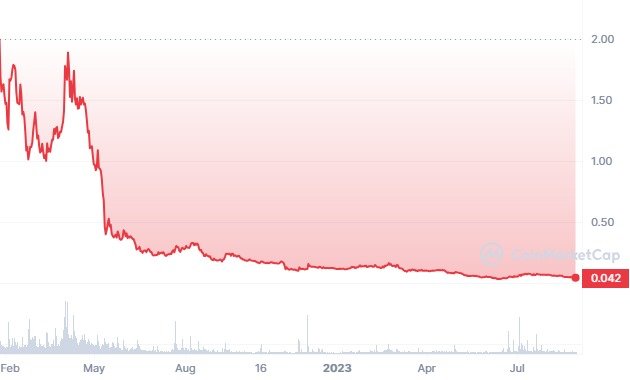
Market Cap: $111,262,996
Circulating Supply: 799,979,166 ACA
Supply Cap: 1,000,000,000 ACA
All Time High: $2.79 Jan 25, 2022.
All Time Low: $0.214857 Jun 29, 2022.
Brief Description of Acala
Acala is groundbreaking force in the world of decentralized finance (DeFi) within the Polkadot ecosystem. Operating as a parachain on the Polkadot network, Acala sets out to revolutionize financial services by seamlessly bridging different blockchains, fostering an interconnected DeFi landscape. At its core, Acala provides a suite of advanced DeFi tools including stablecoins, decentralized exchanges (DEX), and lending protocols. This holistic approach empowers users to access a wide range of financial services while also facilitating cross-chain collaboration, marking a significant step toward the broader adoption of blockchain technology.
Central to Acala’s ecosystem is its native token, HONOR, which not only serves as a transactional currency but also grants its holders the power to participate in platform governance. This democratic approach empowers users to influence decisions regarding upgrades, protocol adjustments, and overall system enhancements. Acala’s innovative approach to DeFi, coupled with its interoperability solutions, places it at the forefront of the Polkadot ecosystem, promising a more connected, accessible, and user-centric financial landscape.
Acala is Ranked #167 on Coinmarketcap and #220 on Coingecko, It can be Purchased currently on Binance, OKX, Bybit, Bitget, and MEXC.

The Brains Behind Acala
The driving force behind Acala is a talented team of visionaries and experts deeply entrenched in the blockchain and DeFi space. Spearheaded by Ruitao Su, Acala’s co-founder and CEO, the team brings a diverse array of skills and experiences. Su’s background includes engineering roles at tech giants like Microsoft and Alibaba, showcasing his technical prowess. He is joined by Bryan Chen, Acala’s CTO, who comes with an impressive track record of leading blockchain development projects.
Acala’s team extends its reach to various domains, including blockchain engineering, research, design, and community development. Their collective expertise ensures the continuous evolution and enhancement of Acala’s platform, as well as its commitment to fostering an open, inclusive, and innovative DeFi ecosystem within the Polkadot network.
Advantages of Acala
-
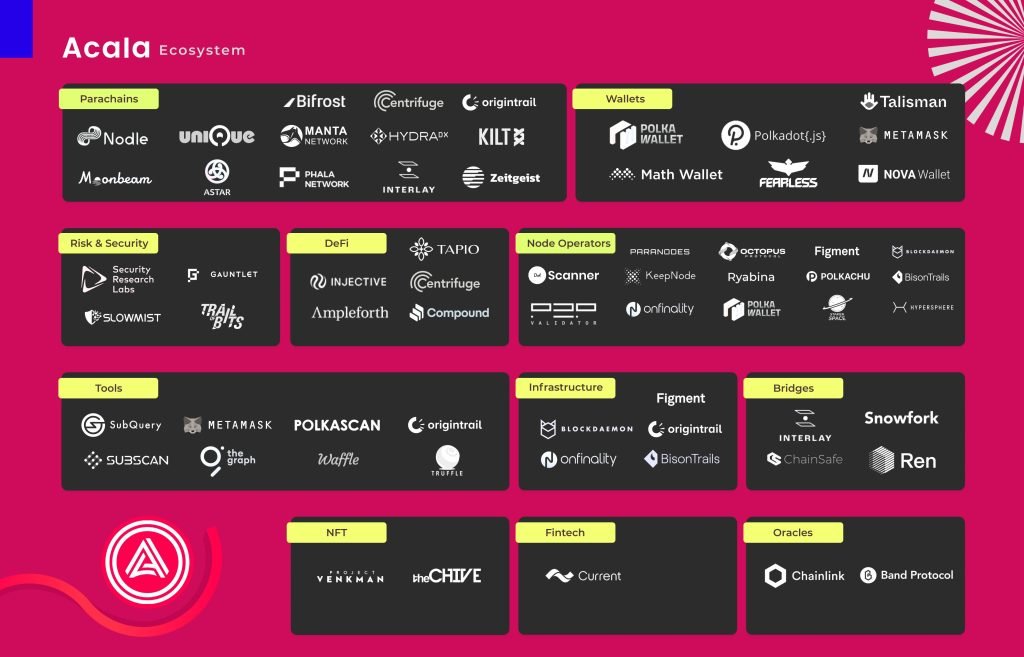
Acala has numerous partnerships that one would have expected would take a lot of time.
-
Acala have a Vibrant Community
-
It enables Users to Swap Token
-
It is Decentralized: Many stablecoins are centralized, meaning that they depend on a central party to issue the stablecoin.

Disadvantages of Acala
-
No possibility of Acala Mining
-
There is high competition among other Ethereum based networks.
Use Cases of Acala
- Acala can be used to pay network transaction fees, stability fees as interest on aUSD loans when using Honzon, and penalty fees during liquidation.