Introduction
FRAX SHARE NETWORK is a system for stablecoins that is decentralized and uses a hybrid of tokens backed by collateral and algorithmic mechanisms. Two tokens make up the network: FRAX, the stablecoin that strives to keep a $1 peg, and Frax Shares (FXS), the governance token that represents the network’s value. The network also has a sub-token, Frax Price Index Share (FPIS), which is associated with FXS and regulates the Frax Price Index (FPI) stablecoin.
Overview
The Frax Protocol stands as a beacon of innovation within the ever-evolving landscape of Decentralized Finance (DeFi). Its core foundation lies in the issuance of three distinct stablecoins:
FRAX: The unwavering USD-pegged stablecoin, providing users with a reliable medium of exchange and a stable store of value.
FPI: Pioneering a new frontier, the Frax Price Index (FPI) establishes itself as the first stablecoin pegged to a basket of consumer goods, offering a unique unit of account independent of any nation-state currency.
frxETH: Replacing WETH within smart contracts, frxETH seamlessly bridges the gap by pegging its value to the ever-fluctuating Ethereum, ensuring stability and efficiency for DeFi applications.
But the Frax Protocol goes beyond just issuing stablecoins. It further expands its reach through the integration of three subprotocols:
Fraxswap: This revolutionary AMM implements time-weighted average market maker orders, empowering the Frax Protocol with efficient rebalancing, minting/redemption capabilities, and strategic deployment of protocol-owned liquidity on the blockchain.
Fraxlend: Ushering in a new era of lending, Fraxlend establishes itself as the go-to facility for Frax-based stablecoins. It facilitates debt origination, customization of non-custodial loans, and the seamless onboarding of collateral assets, further enriching the Frax Finance ecosystem.
Fraxferry: Bridging the gap between chains, Fraxferry acts as an optimistic transfer protocol, enabling the efficient and secure transfer of natively issued Frax Protocol tokens across a multitude of blockchains.
The Frax Finance ecosystem is further guided and governed by two key tokens:
FXS (Frax Share): Acting as the base layer governance token, FXS empowers its holders to actively participate in shaping the future of the Frax ecosystem. It accrues fees, revenue, and excess collateral value, ensuring its holders benefit directly from the protocol’s growth and success.
FPIS (Frax Price Index Share): Serving as the dedicated governance token for the FPI stablecoin, FPIS holders share the value captured by the FPI alongside FXS holders, solidifying the community’s role in governing this innovative stablecoin.
To incentivize community participation and engagement, the Frax Protocol implements a unique Gauge Rewards System. This allows the community to propose and vote on new gauge rewards for strategies that integrate Frax-based stablecoins. With FXS emissions fixed and halving each year, these rewards are entirely allocated to different gauges based on the votes of veFXS stakers, ensuring the community’s voice is heard and rewarded.
Through this innovative blend of stablecoins, subprotocols, and community-driven governance, the Frax Protocol positions itself as a leading force in DeFi. Its commitment to decentralization, continuous development, and community engagement paves the way for the future of stablecoins and DeFi, fostering a truly collaborative and empowering financial ecosystem.
Background

Frax Finance which was formerly named Decentral bank, founded in 2019, owes its success not only to its visionary founder, Sam Kazemian, but also to the talented and dedicated team he assembled, each member contributing their unique expertise to propel the project’s continuous evolution and growth.
Travis Moore, the Chief Technology Officer (CTO), leads Frax’s technical infrastructure. His expertise in architecture and development ensures the project’s technological foundation remains robust and scalable.
Jason Huan, the Chief Operating Officer (COO), spearheads the operational side of Frax. His dedication to managing processes and fostering community engagement is crucial to the project’s smooth functioning and growth.
Frax, a pioneer in decentralized stablecoin creation and management, boasts a young but impactful history. Its journey began in 2019 with the ambition to develop a more stable and flexible stablecoin compared to existing models. This vision aimed to address limitations inherent in purely algorithmic or collateralized approaches.
2020 marked a pivotal year with the official launch of the Frax Protocol on Ethereum, introducing the FRAX stablecoin and its governance token, FXS. This significant milestone opened doors for users to explore a novel approach to interacting with stablecoins within the DeFi space.
Frax’s growth and adoption rapidly accelerated in 2021. The project attracted considerable user interest and investment, fueling further development and expansion to new blockchains like Avalanche and Fantom, enhancing accessibility and reach.
Several key milestones solidified Frax’s position as an innovator:
– February 2021: The launch of the Frax Price Index (FPI), the first stablecoin pegged to a basket of on-chain assets, provided a unique unit of account independent of existing national currencies.
– May 2021: Frax introduced the Frax Price Index Share (FPIS) token, specifically designed to govern the FPI stablecoin, ensuring community involvement in its future trajectory.
– October 2021: A successful migration to a new and improved smart contract enhanced security, scalability, and paved the way for future innovations.
Throughout 2022, Frax continued its evolution, integrating with diverse DeFi applications and protocols, broadening its utility and reach. The team actively researched and implemented new features and functionalities, pushing the boundaries of stablecoins and DeFi.
Tokenomics

In the Frax Network, there are two tokens: FRAX and FXS. The Frax Share Network (FXS) orchestrates a complex yet elegant symphony of tokenomics, meticulously balancing user incentives, governance power, and ecosystem sustainability. This intricate composition ensures the network’s continued growth, fostering a thriving community and propelling FXS to the forefront of the DeFi landscape.
In December 2020, the FXS token debuted through a community-driven launch, eschewing traditional pre-allocations or Initial Coin Offerings (ICOs). This approach emphasized a fair and equitable distribution of tokens, prioritizing community participation and ownership from the outset. By avoiding pre-allocations and ICOs, the launch aimed to foster a strong and dedicated community, laying the foundation for the Frax protocol’s long-term success. The FXS token was launched as thus:
Community:
– Allocation: 60% (65,000,000 FXS)
– Distribution:
– Liquidity programs
– Farming initiatives
– Community-driven governance proposals
– Gauges (25,000 FXS per day)
– FRAX-FXS Uniswap v2 pool (16,438.37 FXS per day)
– Schedule: Halves every 12 months on December 20th
– Governance: Community decides which pools and programs receive rewards, within the overall allocation.
Team and Investors:
– Allocation: 35% (35,000,000 FXS)
Project Treasury:
– Allocation: 5% (5,000,000 FXS)
– Distribution: Team and community discretion
Use Cases of FXS Token
Beyond its role as the native token of the Frax ecosystem, FXS offers a multifaceted utility that empowers users, incentivizes participation, and fuels the protocol’s long-term sustainability. Let’s delve into the diverse use cases that define the FXS token:
– Shaping the Future: Decentralized Governance
FXS holders wield significant power in shaping the Frax protocol’s future through on-chain governance. Their ability to propose and vote on Frax Improvement Proposals (FIPs) allows them to directly influence critical decisions regarding protocol parameters, fee adjustments, new features, and other vital aspects. This decentralized governance structure ensures that the Frax protocol remains responsive to the needs and desires of its community, fostering a collaborative environment for continuous evolution and adaptation.
– Unlocking Rewards: Staking and Incentives
FXS tokens can be staked in various pools to earn lucrative rewards, incentivizing long-term holding and active participation within the ecosystem. Depending on the pool chosen, rewards can be distributed in the form of additional FXS tokens, other DeFi tokens, or even exclusive access to unique features within the Frax platform. This creates a compelling incentive for users to contribute to the network’s security and stability while reaping attractive benefits,
– Shaping Supply and Value: Minting and Redeeming Frax
A crucial element of the FXS token design lies in its role during the minting and redemption of Frax stablecoins. When users engage in these activities, a small fee is automatically burned in FXS tokens, permanently reducing the circulating supply. This deflationary mechanism exerts upward pressure on the value of FXS over time, potentially leading to increased capital appreciation for holders. Additionally, the collected fees contribute to the ongoing development and growth of the Frax ecosystem, ensuring its long-term sustainability.
– Privilege and Access: Exclusive Features
FXS holders are granted access to exclusive features and benefits within the Frax ecosystem, the extent of which depends on their holdings. These privileges can encompass early access to upcoming features, participation in specialized governance committees, or even exclusive voting rights on critical proposals. Such incentivizes long-term commitment and loyalty, fostering a dedicated and engaged community.
– Collateralized Opportunities: Lending and Borrowing
The utility of FXS extends beyond the Frax ecosystem, as it can be used as collateral to borrow other assets within various DeFi lending platforms. This allows users to leverage their FXS holdings to access liquidity for diverse purposes, including trading, yield farming, or other investment opportunities. By integrating seamlessly into the wider DeFi landscape, FXS expands its utility and provides users with greater financial flexibility.
– The Speculative Realm: Trading and Value Appreciation
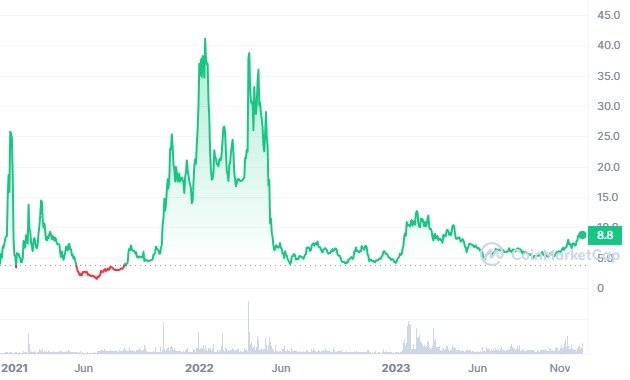
Similar to other crypto assets, FXS tokens can be traded on secondary markets for speculative purposes. The token’s value is influenced by a combination of factors, including the overall market sentiment, the performance of the Frax protocol, and future expectations for its growth. While trading offers potential for capital appreciation, it also carries inherent risks associated with market volatility, requiring careful consideration and risk management.
Features and Functionality
The Frax Share Network stands out amongst its peers in the DeFi landscape, boasting a unique combination of features that empower users, incentivize participation, and propel the protocol towards continued growth. These are the core features that define the Frax Share Network:
- Hybrid Stablecoin Innovation: Frax departs from conventional stablecoin design, employing a hybrid approach that leverages both algorithmic and collateralized mechanisms. This ingenious combination grants greater flexibility and stability compared to solely algorithmic or purely collateralized models.
- Decentralized Governance: A Community-Driven Vision: FXS token holders wield significant power in shaping the future of the Frax protocol through on-chain voting. This empowers the community to directly impact critical decisions regarding protocol parameters, fee adjustments, new features, and other aspects crucial to the ecosystem’s evolution. This decentralized governance structure ensures transparency, accountability, and responsiveness to community needs.
- Deflationary by Design: Burning Fees for Value Enhancement: A portion of the protocol’s generated fees fuels a buyback and burn mechanism for FXS tokens. This deflationary design reduces the circulating supply over time, potentially leading to increased value for FXS holders and a more sustainable long-term ecosystem.
- Staking Rewards: Incentivizing Participation and Security: FXS token holders can earn attractive rewards by staking their tokens in designated pools. This incentivizes long-term holding and active participation, contributing to the network’s security and stability.
- Adaptable Collateralization: Embracing Diversification: Frax utilizes a diverse range of collateral assets to underpin its stablecoin issuance. This flexibility allows the protocol to adapt to changing market conditions and maintain stability even during periods of heightened volatility.
- Bridging Chains: Expanding Reach and Interoperability: Frax actively pursues cross-chain integrations, facilitating interoperability and allowing users to access the benefits of Frax across various blockchain ecosystems. This expands the protocol’s reach and fosters a more interconnected DeFi landscape.
- Open-source Collaboration: Building Trust and Promoting Innovation: The Frax protocol is built on open-source code, enabling transparency and community-driven development. This fosters trust and encourages collaboration, leading to continuous innovation and contributing to the long-term sustainability of the project.
- Community-Driven Initiatives: A Collaborative Force for Growth: The Frax community plays a crucial role in promoting the protocol’s growth and adoption. Through various initiatives, such as grants, educational programs, and marketing campaigns, the community actively contributes to expanding Frax’s reach and impact within the DeFi landscape, ensuring its continued relevance and success.
Advantages of Frax Network
- Algorithmic Money with Scalability and Decentralization
Frax transcends the limitations of fixed-supply digital assets like Bitcoin by introducing a scalable and decentralized algorithmic money system. This innovative approach empowers users with greater flexibility and control over their financial assets, paving the way for a more dynamic and responsive financial ecosystem.
- A Hybrid Solution for Stablecoin Stability
Frax avoids the pitfalls of existing stablecoin models by adopting a hybrid design that combines the best features of fiat-collateralized, crypto-collateralized, and algorithmic stablecoins. This unique approach leverages the strengths of each model to achieve unprecedented stability and resilience, ensuring Frax remains a reliable and trustworthy store of value even in volatile market conditions.
- Dynamic Collateralization for Optimal Efficiency
Frax employs a dynamic collateral ratio that automatically adjusts based on market demand and the price of FRAX. This intelligent mechanism ensures optimal efficiency and stability by dynamically adjusting collateral requirements based on real-time market conditions. This dynamic approach removes the need for manual interventions while maintaining a healthy balance between stability and efficiency.
- Deflationary Supply for Long-term Value Appreciation
Frax features a deflationary supply of FXS tokens, designed to increase in value as the demand for FRAX grows. This incentivizes long-term holding and community participation, while simultaneously contributing to the overall stability and sustainability of the ecosystem. By implementing this deflationary mechanism, Frax ensures that its token value appreciates over time, offering users a compelling long-term investment opportunity.
- Unlocking the Potential of Synthetic Assets
Frax enables the creation of synthetic assets that can track any price feed. This groundbreaking feature expands the possibilities of DeFi by allowing users to gain exposure to a vast array of financial instruments, including stocks, commodities, and even real-world assets.
Risks and Challenges
- Navigating the Regulatory Landscape
While Frax Share boasts significant advantages, its long-term success hinges on navigating the evolving regulatory landscape surrounding stablecoins and synthetic assets. Currently, the legal status of these financial instruments remains unclear in many jurisdictions, posing potential challenges and restrictions to Frax Share’s adoption and growth.
- The Technical complexity
The intricate web of smart contracts, oracles, and governance mechanisms powering the Frax protocol necessitates a high level of technical expertise and meticulous maintenance to ensure its smooth and secure operation. While this complexity offers significant benefits in terms of flexibility and decentralization, it also introduces inherent vulnerabilities that could jeopardize the network’s stability and functionality if technical glitches, bugs, or attacks were to occur.
- Market Competition
Frax Share Network operates within a dynamic and competitive landscape, sharing the space with other innovative projects offering fractional-algorithmic stablecoins and synthetic assets. Notably, Ampleforth, Terra, and Synthetix stand as prominent contenders, each with its own unique set of advantages and disadvantages.
- User Adoption
The success of Frax Share network relies on its ability to gain and keep users who are interested in using and owning its tokens, particularly FXS, which plays a key role in the system’s management and value creation. Various factors influence how well users adopt the network, such as how informed, educated, motivated, and satisfied they are.
How the Frax Network Addresses Challenges
– Frax Share operates within a complex regulatory landscape, requiring careful adherence to the evolving laws and regulations across various jurisdictions. As a responsible player within the DeFi space, Frax Share prioritizes compliance and transparency, demonstrating its commitment to responsible innovation and user protection.
– Frax Share’s success hinges on the unwavering security and reliability of its core components: smart contracts, oracles, and governance mechanisms. By prioritizing robust security measures and continuous vigilance, Frax Share strives to ensure a seamless and trustworthy experience for its users.
– Frax Share distinguishes itself in the fiercely competitive realm of stablecoin and synthetic asset projects through relentless innovation and dedication to user experience. Frax Share carves its own path in the competitive realm of DeFi by offering a unique combination of features and compelling advantages. This distinctive approach attracts users seeking a more efficient, secure, and rewarding experience within the decentralized finance landscape.
– Frax Share recognizes the importance of fostering a knowledgeable and engaged community. By prioritizing user education, incentivizing participation, and rewarding loyalty, Frax Share builds trust, promotes adoption, and empowers users to navigate the decentralized finance landscape.
How Is The Frax Network Secured
The Frax Share Network currently operates on the Ethereum blockchain, leveraging the power of a robust and widely adopted network. However, its journey towards efficient and secure operations involved a crucial shift in its consensus mechanism. In December 2022, Frax Share transitioned from the Proof of Work (PoW) algorithm to the more sustainable and scalable Proof of Stake (PoS) consensus mechanism. This strategic move marked a significant milestone in Frax Share’s development, paving the way for a more robust and future-proof network.
Conclusion
Frax Share operates on the Ethereum blockchain, leveraging a hybrid stablecoin and synthetic asset ecosystem secured by the efficient and sustainable Proof-of-Stake consensus mechanism. This innovative design combines the best of algorithmic and collateralized models for enhanced stability and adaptability. By prioritizing user education, incentivizing participation, and rewarding loyalty, Frax fosters a thriving community empowered to navigate the DeFi landscape. This dedication to user experience and long-term sustainability positions Frax as a leading force in shaping a more inclusive financial future.
Sources
https://cryptoticker.io/en/everything-you-need-to-know-about-frax-shares/
https://www.securities.io/investing-in-frax-share/https://frax.finance/
https://docs.frax.finance/
https://medium.com/crypto-beat/what-is-frax-and-why-is-it-popular-among-stablecoin-users-9e21f84f2e60