PlayDapp
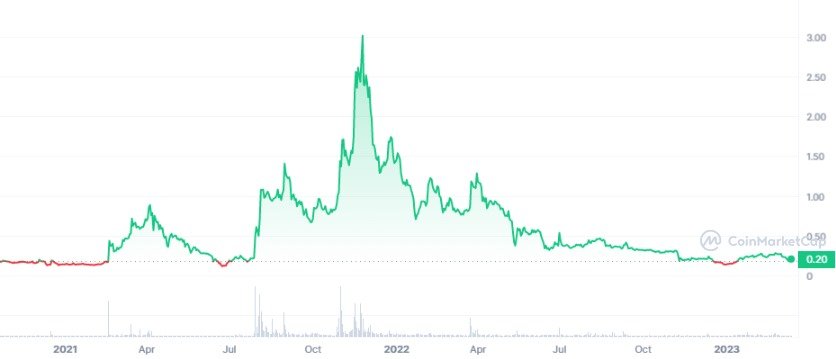
PlayDapp price action since launch: Courtsey: coinmarketcap

PlayDapp Price Stats

  • Market Cap: $169,637,106

  • Circulating Supply: 488,229,678

  • Supply Cap:700,000,000

  • All-Time High: $3.74(October 31, 2021 -90.7%)

  • All-Time Low: $0.093206(June 22, 2021 272.8%)

Brief History of PlayDapp

PlayDapp is a platform that provides PG solutions to play games without cryptocurrency. They aim to onboard non-crypto game users into blockchain games using their platform. They will do so by providing various blockchain networks and game dApps to allow more users to play games on the playDapp service platform and become crypto users.

From its initial price above $0.17 on October 20, 2020, PLA entered a sideways trend for about half a year, with the price consistently below $0.2. On February 17, 2021, it hit its first high of $0.73, likely due to partnering with LINE Blockchain to launch this CryptoDozer, the platform’s first game in Japan. CryptoDozer is a casual collecting game with classic coin push gameplay and candy-inspired design. Players can collect over 30 of his dolls and combine them to create his NFT DozerDolls that can alter gameplay. CryptoDozer previously topped his Ethereum DApp Games category on several websites. PlayDapp is currently ranked #153 on the coin market cap and #189 on coingecko. PlayDapp can be purchased on UpBit, Binance, BKEX, MEXC, crypto.com, and coin base

The PlayDapp Team

The PlayDapp team is made up of 70 experienced developers, operators, marketers, and designers, with executives having years of experience in the PC online and mobile gaming industry. Sang Chung is currently the general manager of the company. Previously, he worked for NCSOFT, a major global game publisher, and an overseas third party. He led the team responsible for business development. While at Korea Creative Content Agency, he was also responsible for all international cooperation and business development support for the games division and international game shows. Donny is the company’s director of development. Before joining PlayDapp, he has almost 20 years of experience in various projects in the IT industry. He developed user-centric services and led several global projects at SK Communications, Naver, and Samsung Electronics. Kai is PlayDapp’s Tournament Director and a veteran of the Korean game industry. Before that, he worked as a professional game server programmer at big companies such as NHN and NETMARBLE. He was also an expert in game platform development.

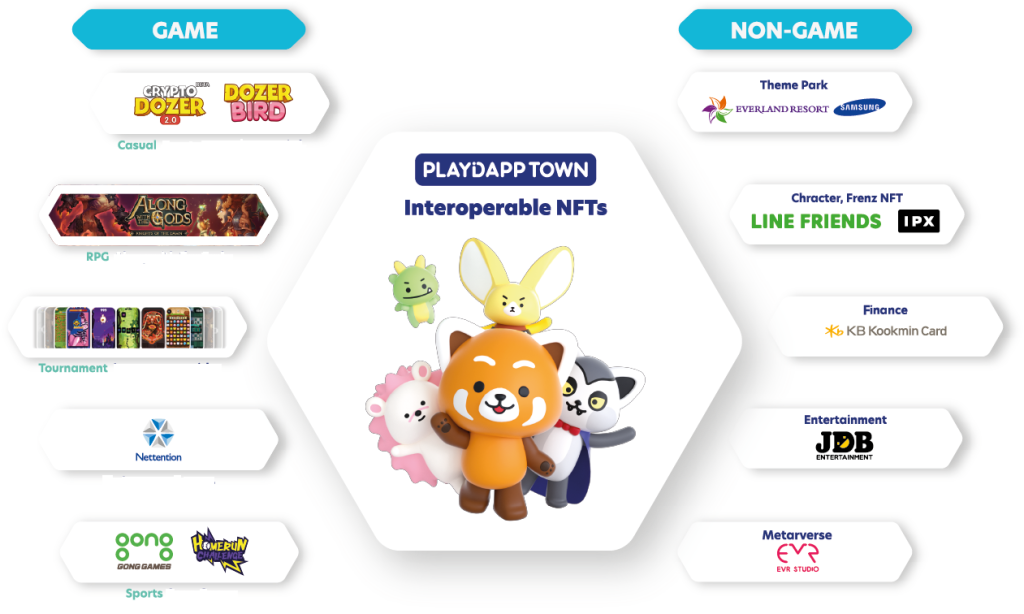
PlayDapp NFT ecosystem

Advantages of PlayDapp

  • Various ways of earning while playing.

  • NFT support

  • An experienced and robust team of professionals 

  • Low gas fees

  • Listed on popular exchanges

Disadvantages of PlayDapp

  • It’s still under development 

  • Synchronization between ledgers issues

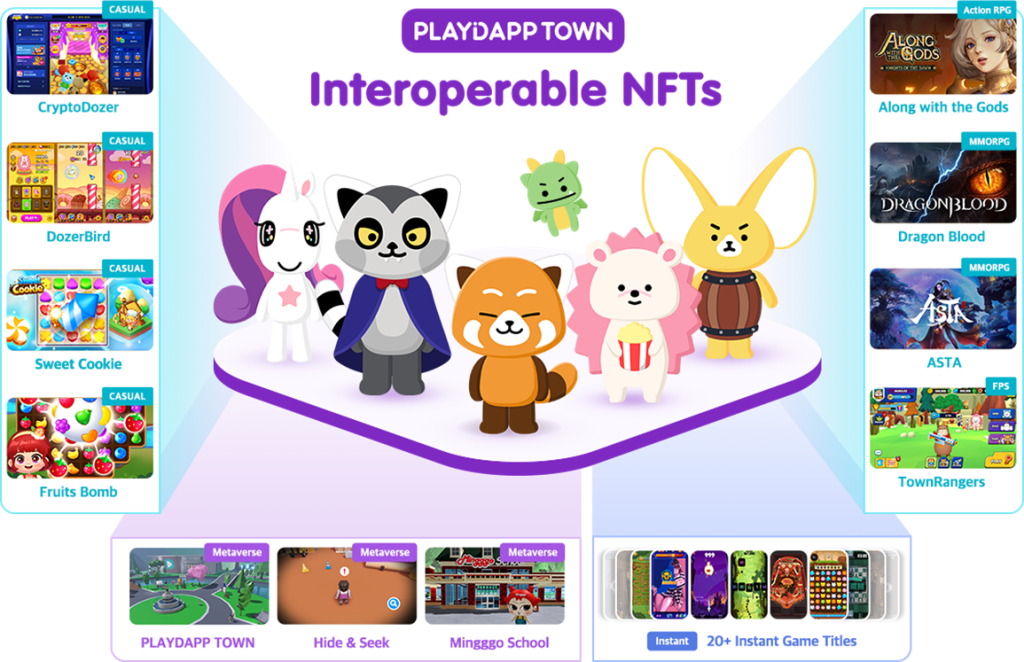
PlayDapp interoperable NFTs

Use Cases of PlayDapp

  • NFT sales

  • NFT trades

  • Tournaments

  • Onboarding non-crypto users into crypto gaming 

  • Provision of diverse blockchain networks for games.

Summary

PlayDapp aims to be a pioneering developer in the blockchain-powered entertainment ecosystem. It provides an SDK that acts as a vehicle to encourage more high-quality gaming DApps to be incorporated into the PlayDapp ecosystem. PlayDapp supports the creation of his NFTs with an easy-to-use token generation solution, as NFTs are the most popular implementation of blockchain technology in the gaming industry

More
articles

What is BRC-20?

BRC-20 is an experimental token standard designed to create semi-fungible tokens on the Bitcoin network using the Ordinals protocol. Initially introduced as a way to overcome Bitcoin’s programmability limitations, BRC-20 tokens enable fungible token creation on the blockchain by inscribing data onto individual Satoshis. This innovation expanded Bitcoin’s utility beyond its core role as a peer-to-peer cash system, allowing for new possibilities in decentralized finance (DeFi) and digital collectibles.
What Are DApps?

Decentralized applications (DApps) are self-operating programs that run on blockchain or distributed ledger systems using smart contracts. They provide utility like traditional apps but without human intervention or central ownership, distributing tokens to represent ownership.
Learn more about crypto and investing

Sign up for our daily newsletter